MBBS abroad for Indian students means studying a six-year, English-medium medical degree at a foreign university and then returning to practise in India after clearing FMGE (to be replaced by NExT). A NEET pass is enough to apply, the total cost is about ₹18–60 lakh, and popular countries include Kazakhstan, Kyrgyzstan, Russia, Georgia and Uzbekistan.
Why Indian students choose MBBS abroad
India has far more NEET-qualified students than affordable medical seats. Government seats need a high rank, and private medical colleges are expensive. MBBS abroad fills that gap for many families.
Advantages
- A NEET pass is enough; no high rank needed
- Total cost of about ₹18–60 lakh, often less than private colleges in India
- No capitation or donation fee
- English-medium programmes for international students
- Admission in about 5–10 weeks
Things to plan for
- You must clear FMGE/NExT to practise in India
- Not every programme meets NMC rules, so check before you pay
- Cold winters in Russia and Central Asia
- Basic local language needed to talk with patients
- Six years away from home
Best countries for MBBS abroad for Indian students
There is no single best country; it depends on your budget, NEET score and preferences. Here is how the countries WCIEC works with compare:
| Country | Total cost (approx.) | Medium | Visa processing | Good for |
|---|---|---|---|---|
| Kazakhstan | ₹18–25 lakh | English-medium batches | About 2–4 weeks | The lowest total cost |
| Kyrgyzstan | ₹25–30 lakh | English | About 2–4 weeks | Low cost and a large Indian student community |
| Russia | ₹30–40 lakh | English-medium batches | About 3–6 weeks | Large, long-established universities and hospitals |
| Georgia | ₹30–60 lakh | English | About 3–6 weeks | A European-style curriculum and milder climate |
| Uzbekistan | Shared in counselling | English (confirm per intake) | Shared in counselling | Studying in the capital, Tashkent |
Costs cover tuition, hostel and food for the full programme. For fees per year and the lowest-cost options, see MBBS abroad fees for Indian students.
MBBS in Kazakhstan
Kazakhstan has one of the lowest total costs among popular destinations, at about ₹18–25 lakh, with English-medium batches and visa processing in about 2–4 weeks. Read the Kazakhstan guide.
MBBS in Kyrgyzstan
Kyrgyzstan offers a six-year English-medium programme (five years of study plus a one-year internship) for about ₹25–30 lakh, with Indian food available near the main campuses. WCIEC partners with Osh State University, Jalal-Abad State University and Jalal-Abad International University. Read the Kyrgyzstan guide.
MBBS in Russia
Russia has large, long-established medical universities with big teaching hospitals, at about ₹30–40 lakh in total. Winters are long and cold. Read the Russia guide.
MBBS in Georgia
Georgia offers English-medium programmes with a European-style curriculum and a milder climate than Russia and Central Asia, at about ₹30–60 lakh in total. Read the Georgia guide.
MBBS in Uzbekistan
In Uzbekistan, WCIEC partners with Kimyo International University in Tashkent, a private university with a School of Medicine for international applicants. Read the Uzbekistan guide.
How to choose the right country
- Budget: the country decides most of the total cost. Fix your budget first.
- NMC compliance: check the programme's duration, internship and teaching language before anything else.
- Climate: Russia and Central Asia have cold winters; Georgia is milder.
- Indian community and food: helpful in the first year, especially for students who have never lived away from home.
- FMGE/NExT preparation: ask what coaching support is available during and after the course.
Eligibility for MBBS abroad
- Pass NEET-UG. A NEET pass (the qualifying score for your category) is enough; you don’t need a high rank. NEET is mandatory for Indian students who want to practise in India after an MBBS abroad.
- Pass Class 12 with Physics, Chemistry, Biology and English.
- Be at least 17 years old by 31 December of the admission year.
- Hold a valid Indian passport.
NMC rules: is MBBS abroad valid in India?
The National Medical Commission (NMC) sets the rules for a foreign MBBS to count in India, under the Foreign Medical Graduate Licentiate Regulations, 2021:
- The course must run for at least 54 months, followed by an internship of at least 12 months at the same foreign university.
- The whole course must be taught in English.
- The degree must make you eligible to register and practise as a doctor in that country.
- The course must be completed within 10 years of joining.
- After returning, you must clear the licensing exam (FMGE, to be replaced by NExT) and complete a 12-month supervised internship in India.
These rules apply programme by programme, not country by country. You can read the regulation on the NMC website, and check that a university exists in the World Directory of Medical Schools.
Before you pay any fee
Ask for the programme's total duration, the internship arrangement and the teaching language in writing. WCIEC checks every programme against the NMC rules before recommending it.
Admission process for MBBS abroad
- Free counselling. A WCIEC counsellor reviews your NEET score, Class 12 marks and budget, and shortlists suitable countries and universities.
- Application and offer letter. WCIEC submits your application; the university's offer or invitation letter usually follows within 1–2 weeks.
- Documents. Prepare, attest and translate your documents. WCIEC helps with apostille and notarisation.
- Student visa. WCIEC files your student visa application and follows it through to approval.
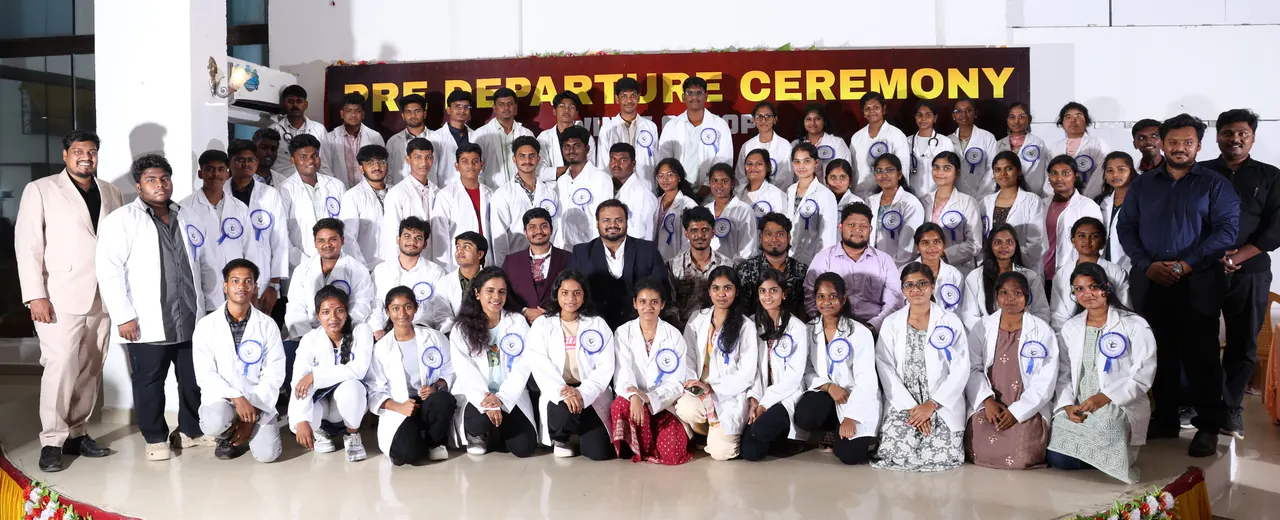
- Pre-departure and travel. Orientation, travel planning and arrival support before you enrol.
The whole process usually takes 5–10 weeks from first counselling to departure.
Documents required
- Class 10 and Class 12 marksheets and certificates (PCB with English)
- NEET-UG scorecard
- Valid passport (at least 18 months validity)
- Passport-size photographs and birth certificate
- Medical fitness certificate and HIV test report
- Apostilled or translated copies where the university or embassy requires them
After MBBS abroad: FMGE, NExT and practising in India
When you return to India, you must clear the licensing exam (FMGE, to be replaced by NExT) and complete a 12-month supervised internship in India before registering as a doctor. Preparing for this exam during your course makes a big difference, which is why WCIEC includes free FMGE/NExT coaching with every admission, taught by doctors covering subjects from Anatomy to Surgery.
MBBS abroad for Indian students: frequently asked questions
Which countries are best for MBBS abroad for Indian students?
Popular countries for MBBS abroad for Indian students include Kazakhstan, Kyrgyzstan, Russia, Georgia and Uzbekistan. Kazakhstan and Kyrgyzstan have the lowest total costs, Russia has large long-established universities, and Georgia offers a European-style curriculum. The best country depends on your budget and preferences, and the programme must meet NMC rules.
Is MBBS abroad valid in India?
Yes, if the programme meets the NMC's Foreign Medical Graduate Licentiate Regulations, 2021: at least 54 months of study plus a 12-month internship at the same university, taught fully in English, and leading to a licence to practise in that country. After returning, graduates must clear FMGE (to be replaced by NExT) and complete a 12-month internship in India.
What is the eligibility for MBBS abroad for Indian students?
Indian students need a NEET-UG pass (the qualifying score for their category), Class 12 with Physics, Chemistry, Biology and English, a minimum age of 17 by 31 December of the admission year, and a valid passport. A NEET pass is enough; you don't need a high rank.
How much does MBBS abroad cost for Indian students?
MBBS abroad costs about ₹18–60 lakh in total for tuition, hostel and food: about ₹18–25 lakh in Kazakhstan, ₹25–30 lakh in Kyrgyzstan, ₹30–40 lakh in Russia and ₹30–60 lakh in Georgia. Flights, visa and personal expenses are extra. See fees per year.
How long does admission for MBBS abroad take?
Admission usually takes 5–10 weeks from the first counselling session to departure, covering university selection, the offer letter, documents and the student visa.
 MBBS in Kazakhstan
 MBBS in Kyrgyzstan
 MBBS in Russia
 MBBS in Georgia
 MBBS in Uzbekistan